
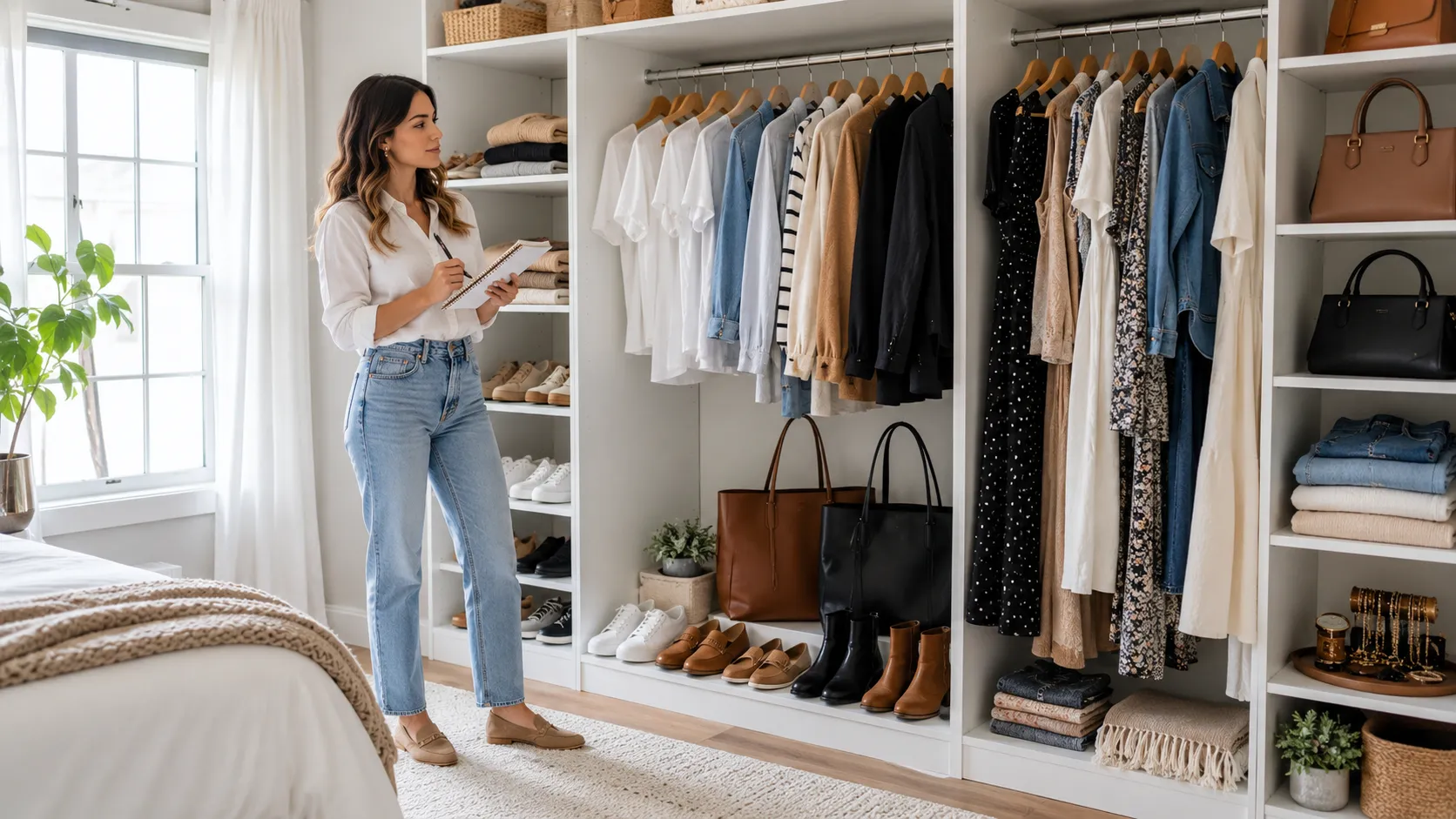
Short Answer Box:
The easiest way to find your personal style is to study the outfits you already wear most, remove pieces that never feel right, save outfit inspiration that matches your real life, and test a few outfit formulas before shopping. You do not need a full new wardrobe. You need clearer outfit patterns, better styling habits, and a short list of missing basics.
Introduction:
If you are searching for how to find your personal style, you probably do not need more random clothes. You need a better way to understand what you actually like wearing.
Personal style is not about copying every trend or buying a closet full of new pieces. It is about knowing which outfits make you feel comfortable, confident, and ready for your real schedule. That might mean clean casual outfits, polished workwear, feminine dresses, relaxed jeans, sporty basics, or a mix of all of them.
This guide will help you find your style using clothes you already own. You will learn how to review your closet, spot your best outfit formulas, build a personal style mood board, and shop only when there is a real gap.
What Personal Style Really Means
Personal style is the way your clothes, shoes, accessories, colors, and outfit shapes work together on you.
It is not one fixed label. You do not have to choose only classic, casual, trendy, minimal, romantic, sporty, or old money. Most women have a mix.
A realistic personal style answers these questions:
What do you wear most often?
What outfits make you feel like yourself?
What colors do you reach for without thinking?
What pieces sit in your closet untouched?
What outfits fit your job, weekends, climate, budget, and body?
The goal is not to create a perfect closet. The goal is to make getting dressed easier.
Step 1: Look at What You Already Wear Most
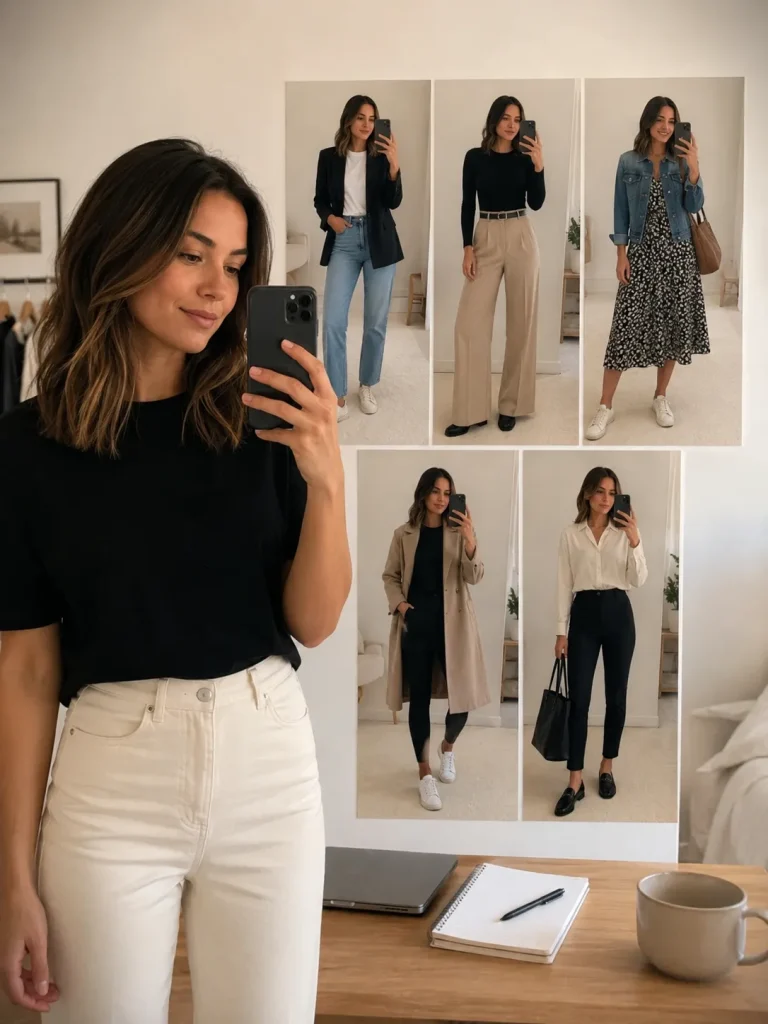
Start with proof, not fantasy.
For one week, take a quick mirror photo of every outfit you actually wear. Do not style yourself for social media. Track the real outfits, including errands, work, school drop-off, dinner, travel, gym days, and lazy weekends.
At the end of the week, look for patterns.
Ask:
Do I wear jeans more than dresses?
Do I prefer sneakers, flats, boots, or sandals?
Do I like fitted tops or relaxed tops?
Do I feel better in neutrals, color, prints, or all black?
Do I keep choosing layers, such as jackets, cardigans, or button-down shirts?
This step shows your real style habits. It also exposes the gap between what you buy and what you wear.
Quick Closet Clue
If you keep buying pretty dresses but live in jeans, your personal style may be casual with dressy details. That means you do not need more dresses first. You may need better tops, shoes, jackets, and accessories that make your jeans outfits feel finished.
Step 2: Create Three Style Words
Choose three words that describe how you want your outfits to feel.
Do not overthink it. Use words that sound like your real life.
Examples:
Clean, casual, polished
Feminine, soft, practical
Relaxed, sporty, simple
Classic, neutral, tailored
Creative, colorful, comfortable
Minimal, modern, easy
Romantic, casual, wearable
Chic, comfortable, everyday
Your three words become your style filter.
Before buying or styling anything, ask:
Does this fit my three words?
Can I wear this with at least three pieces I already own?
Does this work for my actual week?
Step 3: Build a Personal Style Mood Board That Matches Your Life
A mood board helps, but only if it is realistic.
Pinterest and Instagram can make you save outfits that look beautiful but do not fit your budget, weather, job, or comfort level. Save inspiration, then edit it hard.
Look for:
Outfits you would wear this month
Shoes you can walk in
Layers that work in your climate
Colors close to what you already own
Pieces you can recreate with your closet
Avoid saving only vacation outfits, celebrity street style, or outfits that depend on designer bags. Those can inspire you, but they should not control your wardrobe.
What to Save
Save outfits by formula, not by exact product.
Instead of saving “that exact blazer,” save this:
Blazer + tee + straight-leg jeans + loafers
Midi dress + denim jacket + flat sandals
Wide-leg trousers + fitted tank + open button-down
Sweater + slip skirt + ankle boots
Leggings + long coat + sneakers + tote
This makes your style easier to repeat.
Step 4: Find Your Best Outfit Formulas
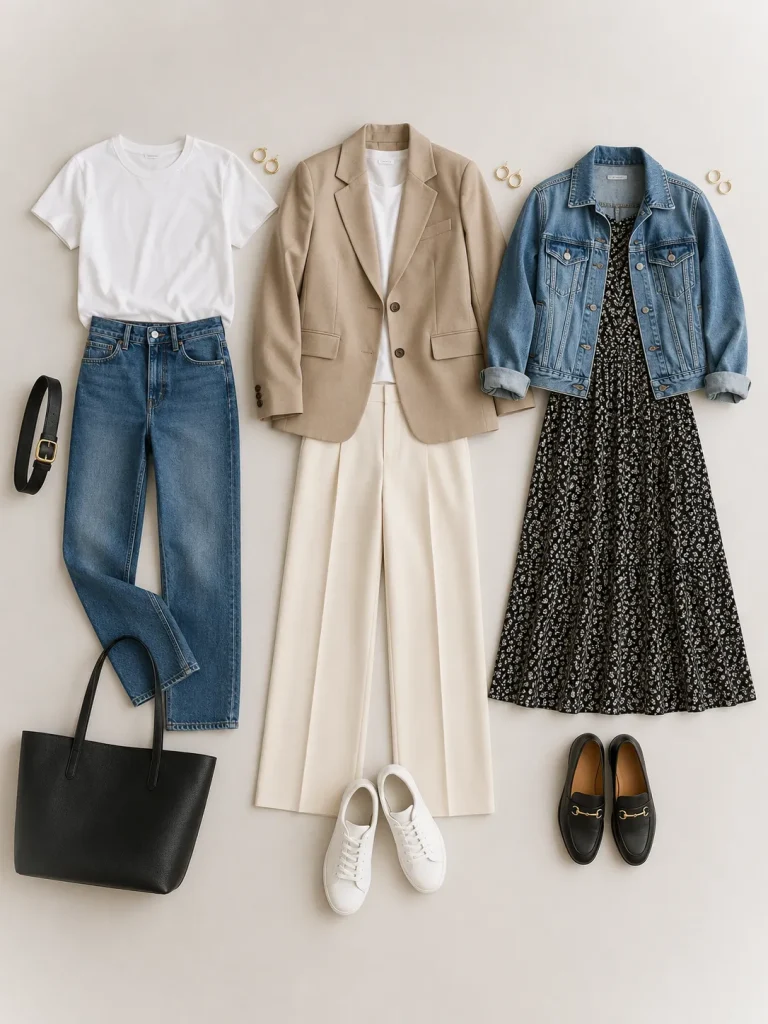
An outfit formula is a repeatable combination that works for your body, lifestyle, and closet.
You can change the colors, shoes, or layers, but the basic structure stays the same.
Formula 1: Jeans + Simple Top + Third Piece
Outfit Formula: straight-leg jeans + fitted tee + blazer, cardigan, or denim jacket + loafers or sneakers
Best For: casual workday, errands, lunch, casual Friday
Why It Works: it starts with pieces many women already own, then the third piece makes the outfit look finished
Styling Tip: tuck or half-tuck the top so your waistline is clear
Optional Product Angle: shop similar straight-leg jeans, basic tees, loafers, or relaxed blazers
Formula 2: Dress + Easy Layer + Comfortable Shoes
Outfit Formula: midi dress + cropped denim jacket or cardigan + flat sandals, ballet flats, or sneakers
Best For: brunch, church, casual parties, spring and summer weekends
Why It Works: the dress gives you one-piece dressing, while the layer makes it feel more styled
Styling Tip: choose a jacket that hits near your waist if the dress is flowy
Optional Product Angle: look for casual midi dresses, cropped jackets, and comfortable flat sandals
Formula 3: Trousers + Fitted Top + Clean Shoes
Outfit Formula: wide-leg trousers + fitted tank, tee, or knit top + loafers, flats, or low sandals
Best For: work, dinner, travel, polished casual outfits
Why It Works: loose pants look cleaner when balanced with a closer-fitting top
Styling Tip: keep the top simple if the trousers have volume
Optional Product Angle: compare wide-leg trousers, ribbed tanks, and low-profile flats
Formula 4: Leggings + Long Top + Structured Layer
Outfit Formula: black leggings + long tee or tunic sweater + trench coat, wool coat, or long cardigan + sneakers or boots
Best For: travel days, errands, coffee runs, casual winter outfits
Why It Works: the longer top gives coverage, while the structured layer keeps leggings from looking like gym wear
Styling Tip: add a tote or crossbody bag so the outfit feels intentional
Optional Product Angle: shop similar black leggings, long tops, sneakers, or travel totes
Formula 5: Skirt + Knit Top + Simple Shoe
Outfit Formula: slip skirt or denim midi skirt + fitted knit top + ankle boots, flats, or sandals
Best For: date night, brunch, casual office, dinner with friends
Why It Works: the skirt adds shape and movement, while the knit top keeps the outfit wearable
Styling Tip: match your shoe color to your top or bag for a cleaner look
Optional Product Angle: look for satin skirts, denim midi skirts, fitted knits, and ankle boots
Step 5: Sort Your Closet Into Four Groups
Do this before shopping.
Group 1: Wear Often
These are your best clues. Look at the colors, fabrics, shapes, and brands. Ask why they work.
Group 2: Like But Do Not Know How to Style
These pieces need outfit partners. Try them with basics before deciding they are wrong.
Group 3: Never Wear
Be honest. If the fit, fabric, color, or comfort bothers you every time, it is probably not part of your style.
Group 4: Special Occasion
Keep useful event pieces, but do not let them confuse your everyday style. A cocktail dress does not need to fit your Monday morning style.
Step 6: Use the “Three Outfit Rule” Before Buying
Before buying any new piece, make three outfits with it in your mind using clothes you already own.
Example:
New beige blazer
Outfit 1: beige blazer + white tee + jeans + loafers
Outfit 2: beige blazer + black trousers + fitted knit top + flats
Outfit 3: beige blazer + midi dress + slingback flats
If you cannot make three outfits, wait.
This rule prevents random shopping and helps you build a wardrobe that works together.
Step 7: Choose Your Core Colors
Most women get dressed faster when their closet has a clear color base.
Your core colors are the colors that show up most in your wardrobe.
Common core color sets:
Black, white, gray, denim
Cream, beige, camel, brown
Navy, white, tan, denim
Black, cream, olive, denim
White, light blue, beige, denim
Then add accent colors.
Good accent colors might be red, blush, burgundy, sage, cobalt, lavender, or soft yellow.
You do not need a strict capsule wardrobe. You just need enough color connection so your pieces can mix.
Step 8: Notice Your Favorite Outfit Shapes
Personal style is also about shape.
Some women feel best in fitted tops and wide-leg pants. Others like oversized shirts with slim pants. Some prefer dresses with waist definition. Some prefer relaxed outfits with clean accessories.
Look for the shapes you repeat.
Common outfit shapes:
Fitted top + wide-leg bottom
Relaxed top + slim bottom
Cropped jacket + high-rise jeans
Long cardigan + leggings
Button-down shirt + straight-leg pants
Midi dress + waist belt
Blazer + jeans
Sweater + skirt
Once you know your favorite shapes, shopping becomes easier.
Step 9: Study What You Do Not Like
Your style gets clearer when you know what to skip.
Make a short “no” list.
Examples:
No stiff shoes
No tops that need constant adjusting
No scratchy knits
No low-rise jeans
No clingy dresses
No tiny bags for daily use
No colors that make me feel washed out
No pieces that need special bras
No high heels unless it is a formal event
This list saves money. It also stops you from buying clothes for a version of yourself that does not match your life.
Step 10: Test One Style Direction at a Time
Do not try to change your whole look overnight.
Pick one direction and test it for two weeks.
Example 1: Clean Casual
Try: straight-leg jeans, white tees, loafers, simple cardigans, neutral bags
Example 2: Polished Feminine
Try: midi dresses, wrap tops, soft blouses, low heels, delicate jewelry
Example 3: Relaxed Sporty
Try: leggings, joggers, sweatshirts, sneakers, baseball caps, nylon bags
Example 4: Classic Workwear
Try: trousers, blazers, button-down shirts, loafers, structured totes
Example 5: Soft Minimal
Try: cream knits, wide-leg pants, simple dresses, clean sandals, gold-tone earrings
After two weeks, ask:
Did I enjoy wearing this?
Was it easy to get dressed?
Did it work for my schedule?
Did I feel like myself?
Keep what works. Drop what feels forced.
Personal Style Outfit Ideas to Try With Clothes You Already Own
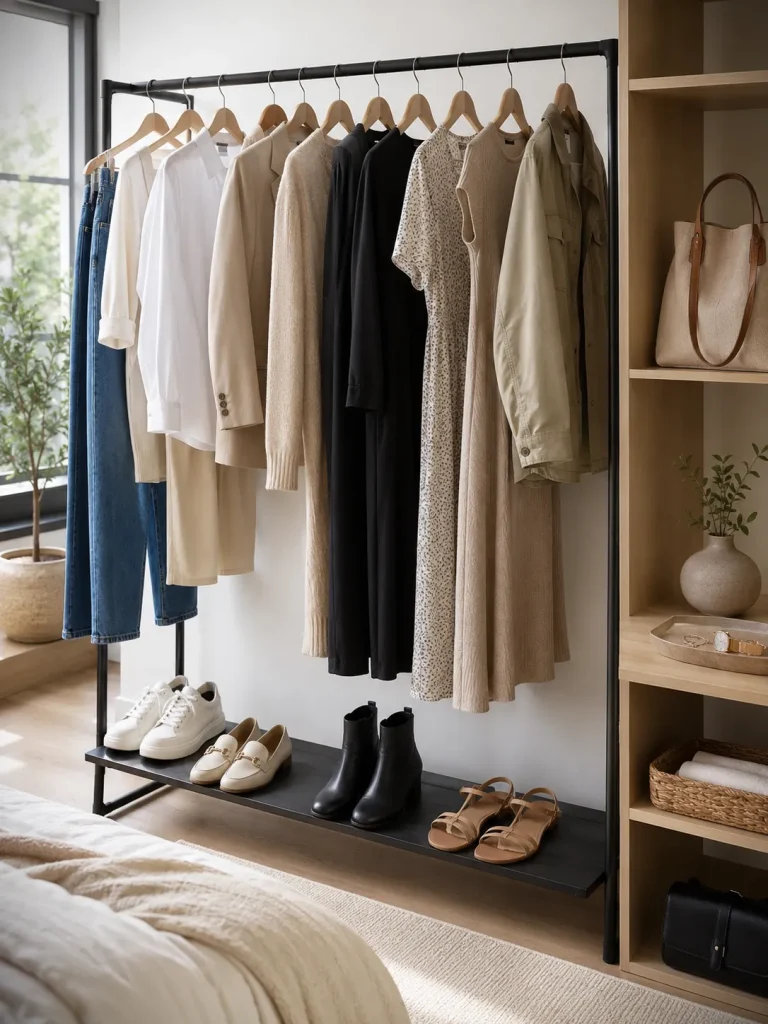
Casual Everyday Style
Outfit Formula: white tee + straight-leg jeans + cardigan + sneakers
Best Occasion: errands, school pickup, casual lunch, weekend shopping
Why It Works: it is simple, repeatable, and easy to adjust for weather
Styling Tip: add small earrings and a crossbody bag to make it feel less plain
Optional Product Angle: shop similar white tees, straight-leg jeans, neutral cardigans, and white sneakers
Polished Work Style
Outfit Formula: blazer + fitted knit top + ankle pants + loafers + tote
Best Occasion: office day, client meeting, business casual workplace
Why It Works: the blazer adds structure, while the knit top keeps the outfit comfortable
Styling Tip: choose ankle pants that show the top of your shoes for a cleaner line
Optional Product Angle: look for relaxed blazers, knit tops, ankle pants, and structured totes
Feminine Weekend Style
Outfit Formula: midi dress + denim jacket + flat sandals + small shoulder bag
Best Occasion: brunch, casual date, baby shower, daytime event
Why It Works: it feels pretty without being too dressy
Styling Tip: choose a denim jacket that does not cover the whole dress shape
Optional Product Angle: shop casual midi dresses, cropped denim jackets, and flat sandals
Minimal Neutral Style
Outfit Formula: cream sweater + black wide-leg pants + loafers + simple tote
Best Occasion: coffee date, casual office, dinner, travel day
Why It Works: the neutral colors make the outfit easy to repeat, and the pants give it polish
Styling Tip: keep accessories simple and clean
Optional Product Angle: compare cream sweaters, black wide-leg pants, loafers, and everyday totes
Sporty Casual Style
Outfit Formula: black leggings + oversized sweatshirt + long coat + retro sneakers
Best Occasion: airport, errands, coffee run, casual weekend
Why It Works: the long coat gives shape and polish to very casual basics
Styling Tip: choose a sweatshirt with no large logo for a cleaner outfit
Optional Product Angle: shop similar leggings, plain sweatshirts, long coats, and comfortable sneakers
Date Night Style
Outfit Formula: dark jeans + satin cami or blouse + cropped jacket + ankle boots
Best Occasion: dinner, drinks, casual concert, movie date
Why It Works: jeans keep it wearable, while the top and shoes make it feel night-ready
Styling Tip: add a small bag and soft makeup to finish the look
Optional Product Angle: look for dark straight-leg jeans, satin camis, cropped jackets, and ankle boots
How to Find Your Style Without Shopping First
Try these before buying anything:
Rewear your favorite outfit in three ways
Change only the shoes
Add a belt
Swap your bag
Roll sleeves or cuff jeans
Try a front tuck
Layer a button-down shirt open over a tank
Wear jewelry you already own
Take mirror photos for comparison
Remove one piece if the outfit feels too busy
Small styling changes can make old clothes feel current.
When It Makes Sense to Buy Something New
Buying is not the enemy. Random buying is the problem.
Buy only when you can name the gap.
Good reasons to shop:
You need better basics that support many outfits
Your current shoes hurt
You do not have weather-appropriate layers
Your work dress code changed
Your size changed
Your lifestyle changed
You keep missing the same item when getting dressed
Weak reasons to shop:
You feel bored for one evening
A trend is everywhere
An influencer made it look easy
A sale feels urgent
You want a full closet reset before doing a closet review
Smart Shopping List for Personal Style
Best starter categories:
Straight-leg jeans
White or black basic tee
Button-down shirt
Relaxed blazer
Neutral cardigan
Black leggings
Wide-leg trousers
Midi dress
Comfortable sneakers
Loafers or ballet flats
Ankle boots
Everyday tote
Small crossbody bag
Simple earrings
Belt in black or brown
Shopping rule: buy pieces that support your best outfit formulas first.
What to Avoid When Finding Your Personal Style
Avoid buying a full new wardrobe at once.
You will waste money before you understand what you actually wear.
Avoid copying one person head to toe.
Use inspiration, but adjust it to your body, budget, weather, and schedule.
Avoid keeping clothes out of guilt.
If a piece makes you feel bad every time you wear it, it is not helping.
Avoid chasing every aesthetic.
Old money, quiet luxury, coastal, sporty, romantic, minimal, and edgy styles can all be useful. You do not need to belong to one category forever.
Avoid ignoring comfort.
If you cannot sit, walk, work, or relax in it, you will not wear it often.
Avoid shopping before checking shoes and layers.
Many outfits fail because the shoes or jacket feel wrong, not because the main clothing pieces are bad.
Simple Weekly Personal Style Practice
Use this 15-minute routine once a week.
Pick one item you want to wear more
Create three outfits with it
Try each outfit on
Take mirror photos
Save the best one in a phone album
Write down what is missing
Repeat next week
After one month, you will have a clear outfit album based on your real closet.
FAQ
How do I find my personal style if I like many aesthetics?
Start by choosing three style words, then test one direction for two weeks. You can like several aesthetics, but your daily outfits need a clear base. Keep the pieces that match your real life and skip the ones that only look good in saved photos.
How long does it take to find your personal style?
Most women can spot strong patterns in two to four weeks if they track outfits, review closet habits, and test outfit formulas. Your style may keep changing, but your core preferences will become clearer fast.
Do I need a capsule wardrobe to find my style?
No. A capsule wardrobe can help, but it is not required. You can find your style by learning your favorite colors, outfit shapes, shoes, layers, and repeat formulas.
What should I buy first when building personal style?
Buy the missing piece that completes the most outfits. For many women, that is better jeans, comfortable shoes, a neutral jacket, a simple tee, or a bag that works with daily outfits.
How do I find my personal fashion style on a budget?
Start with your closet, take outfit photos, rewear your best pieces, and create a short shopping list. Thrift stores, resale apps, outlet sections, and affordable basics can help, but only shop for pieces that fit your outfit formulas.
What if my body has changed and my old style does not work?
Start with fit and comfort first. Keep the colors, outfit moods, and pieces you still love, then rebuild the shapes around your current body. You do not need to dress by strict body rules. You need outfits that feel good now.
Can personal style change over time?
Yes. Your style can change with age, work, location, body changes, budget, lifestyle, and confidence. The goal is not to lock yourself into one look. The goal is to understand what works for this season of your life.
Conclusion
Finding your personal style does not start at the mall. It starts in your closet.
Track what you wear, name your style words, save realistic inspiration, and build outfit formulas around your real life. Then shop only when you know the gap.
The best personal style is not the most expensive one. It is the one that helps you get dressed faster, feel better in your clothes, and stop buying pieces that never leave the hanger.

