
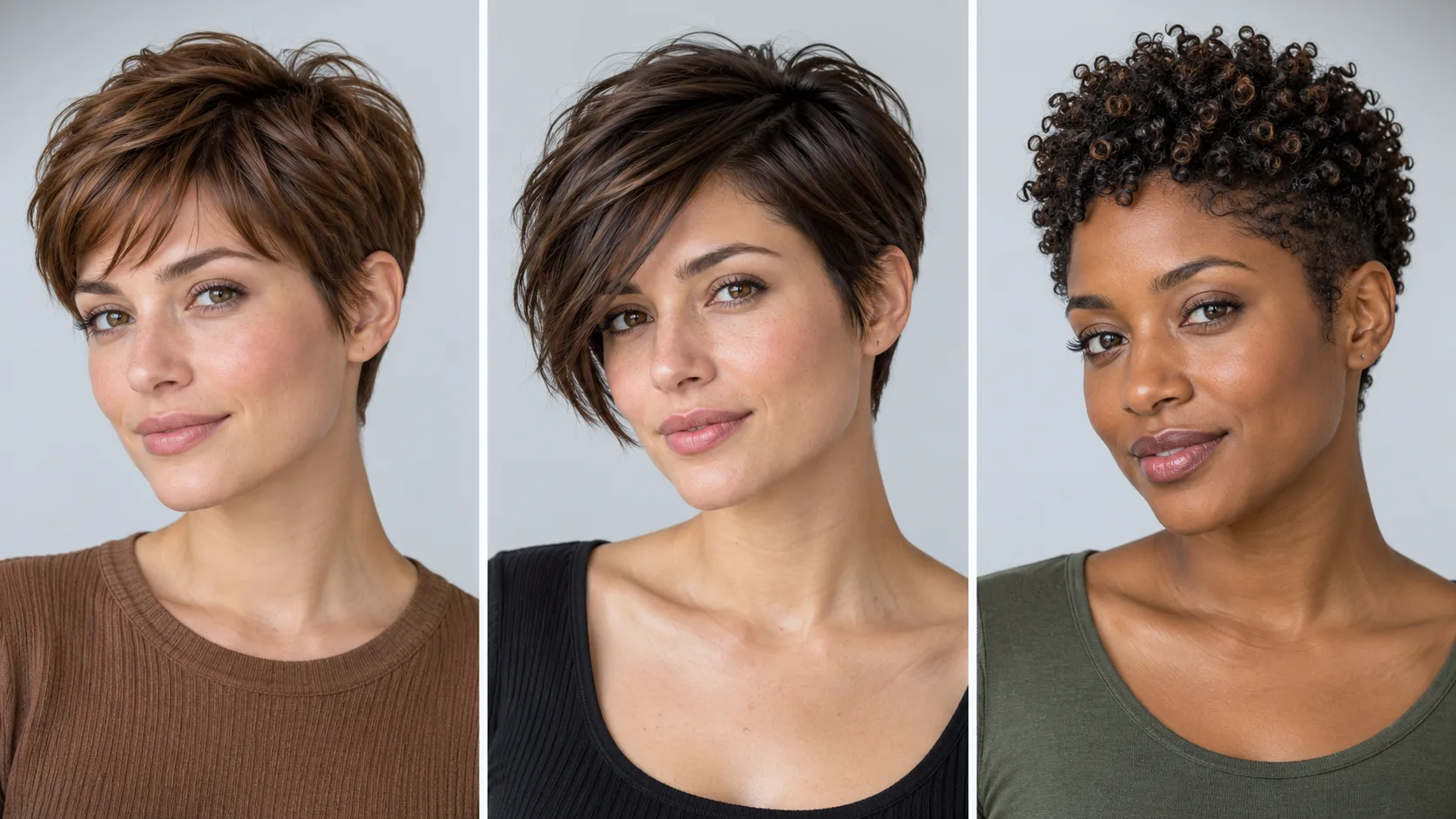
Short Answer Box:
A pixie haircut style has short sides and a short back, with varying lengths through the top and fringe. Choose your version based on your natural texture, preferred forehead coverage, and styling routine. A longer pixie gives you more ways to arrange your hair; a close crop leaves less length to style but needs regular trims to keep its shape.
The right pixie haircut style starts with how your hair behaves. Fine, straight strands need a different approach from dense curls, even when the reference photos look similar.
Before choosing a cut, decide whether you want exposed ears, bangs, crown height, or enough length to tuck behind one ear. Those details give your stylist more useful information than a haircut name alone.
Short hair can reduce drying time. It can also make cowlicks, uneven growth, and an overdue trim more noticeable. Choose a shape you like on an ordinary morning, including days when you have little time to style it.
What Makes a Haircut a Pixie?
A pixie usually sits close to the head around the sides and back, with a longer or more textured top. Some versions expose the ears completely. Others leave soft pieces around the temples and upper ears.
The fringe can be short, swept sideways, curly, or long enough to brush toward the cheekbone. The neckline may have a gentle taper or a more closely clipped finish.
Haircut names overlap. A long pixie can resemble a bixie, which combines elements of a bob and a pixie. Bring front, side, and back photos so your stylist can see the shape you mean.
You do not need to follow a seasonal label. Use the ideas below to identify the length, texture, and outline you want.
20 Pixie Haircut Style Ideas
1. Classic Pixie
A compact crop with softly blended layers, short sides, and a light fringe.
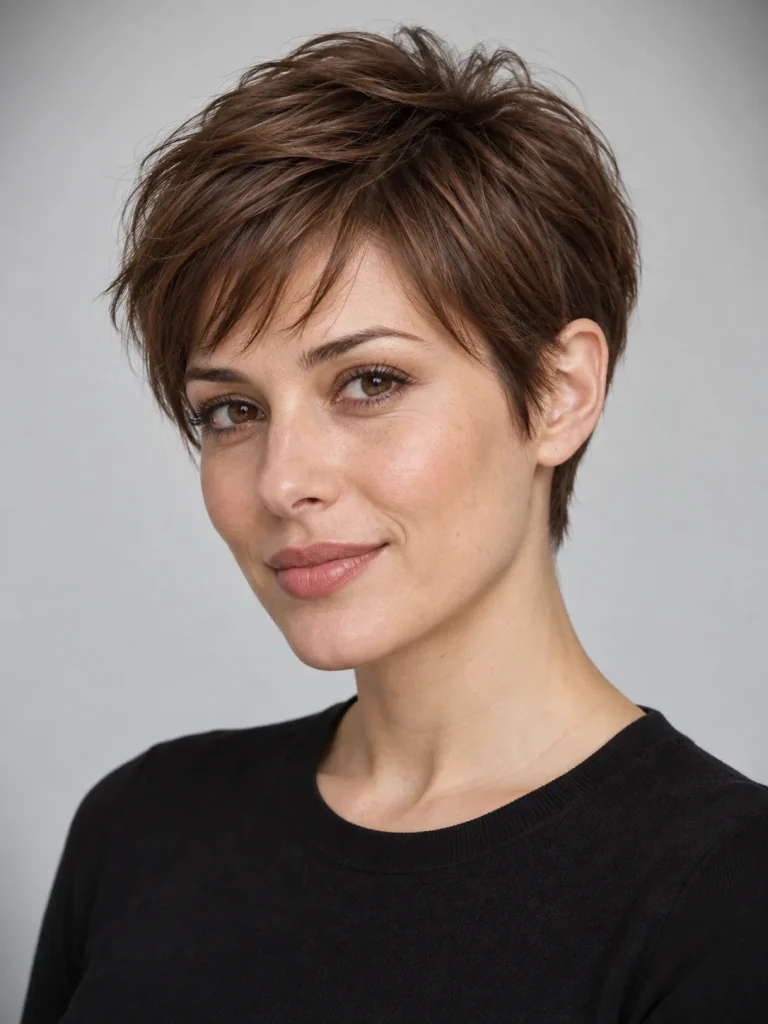
2. Ultra-Short Pixie
A very close crop with a tiny fringe and minimal crown height.
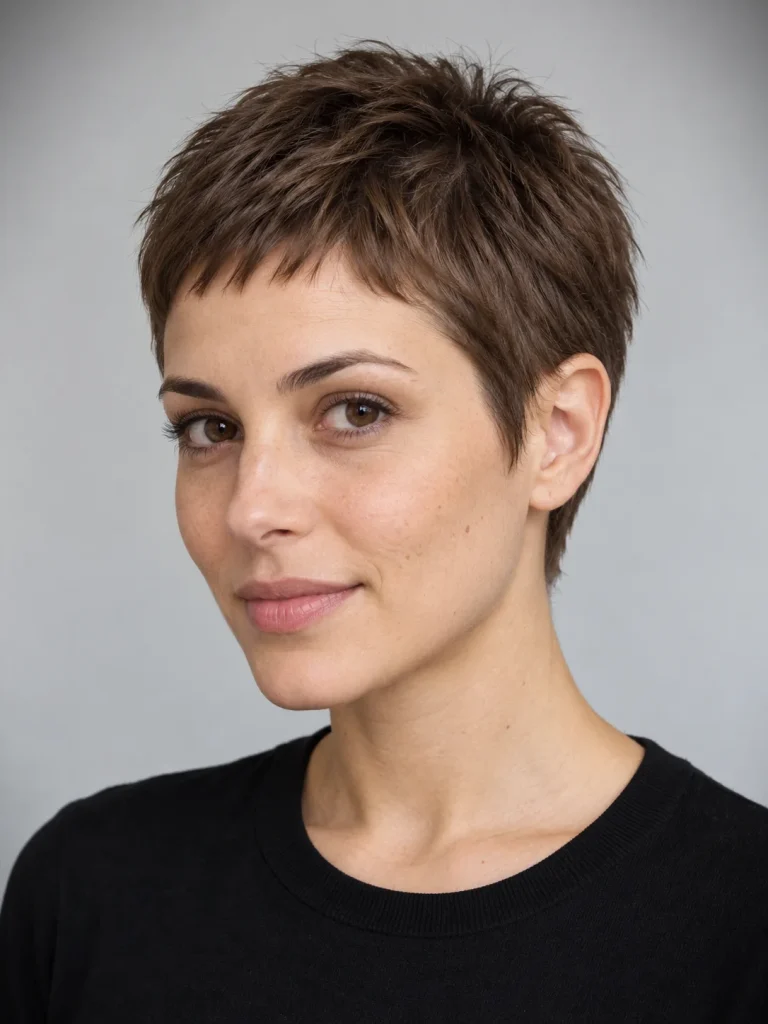
3. Long Pixie
Longer top layers and temple pieces soften the outline while the back remains cropped.
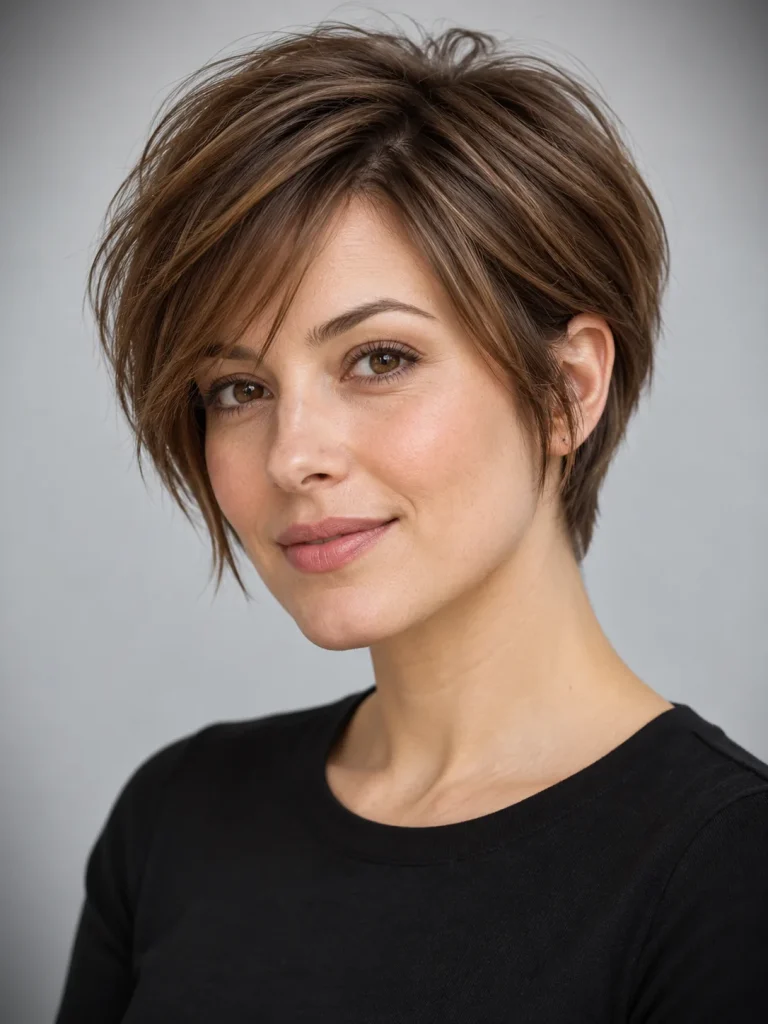
4. Soft Feathered Pixie
Light, finely tapered ends create a softer outline around the forehead and temples.
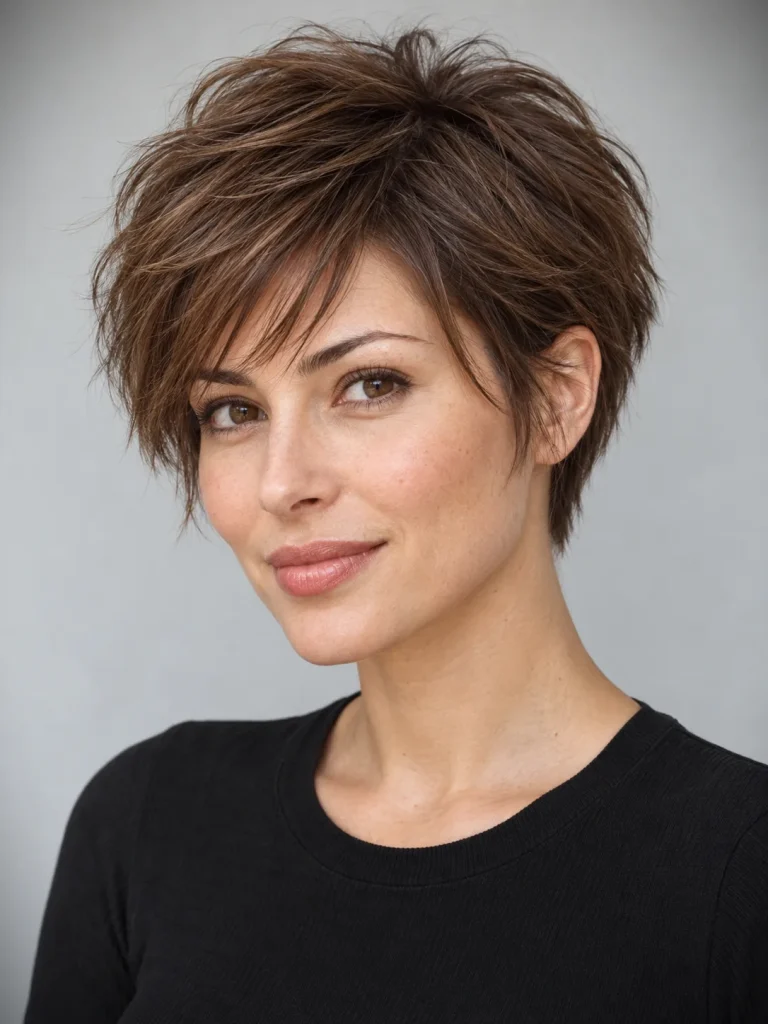
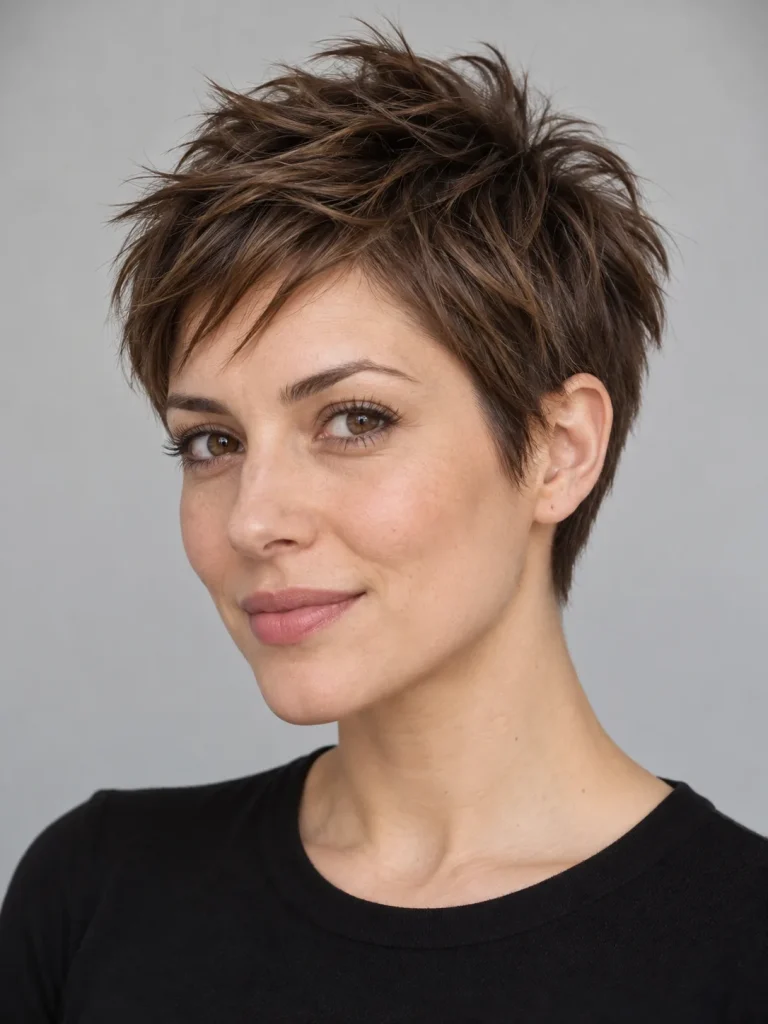
5. Choppy Pixie
Uneven layer lengths create stronger separation and a deliberately textured surface.
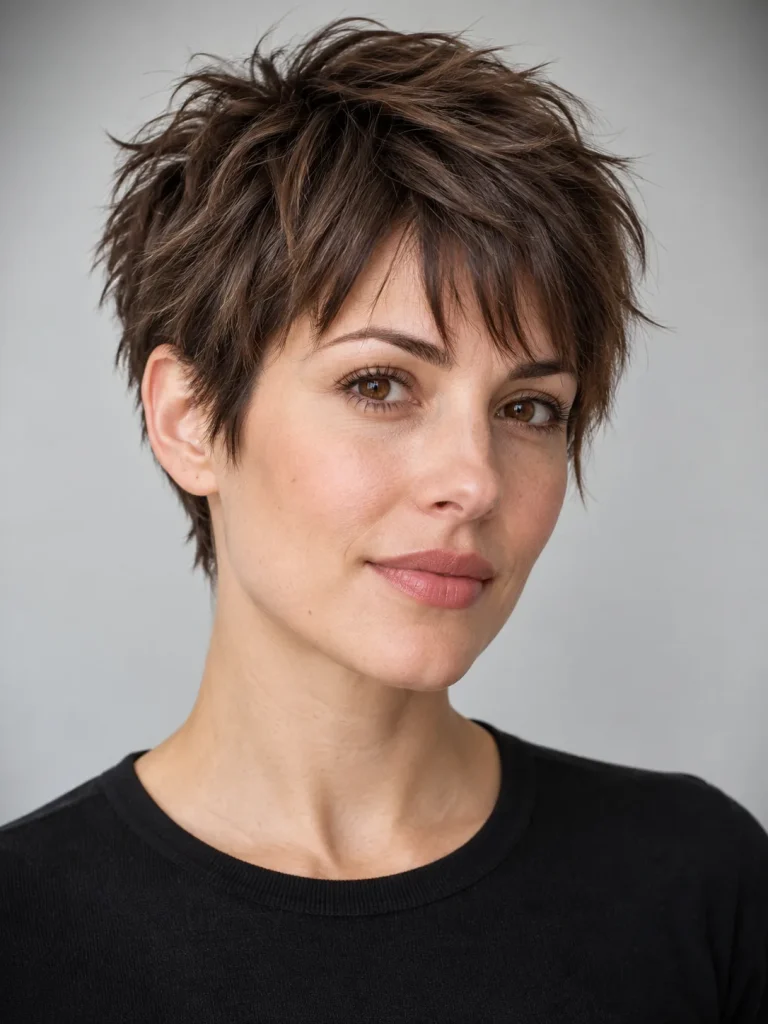
6. Shaggy Pixie
Short crown layers meet longer, wispy pieces around the face and ears.
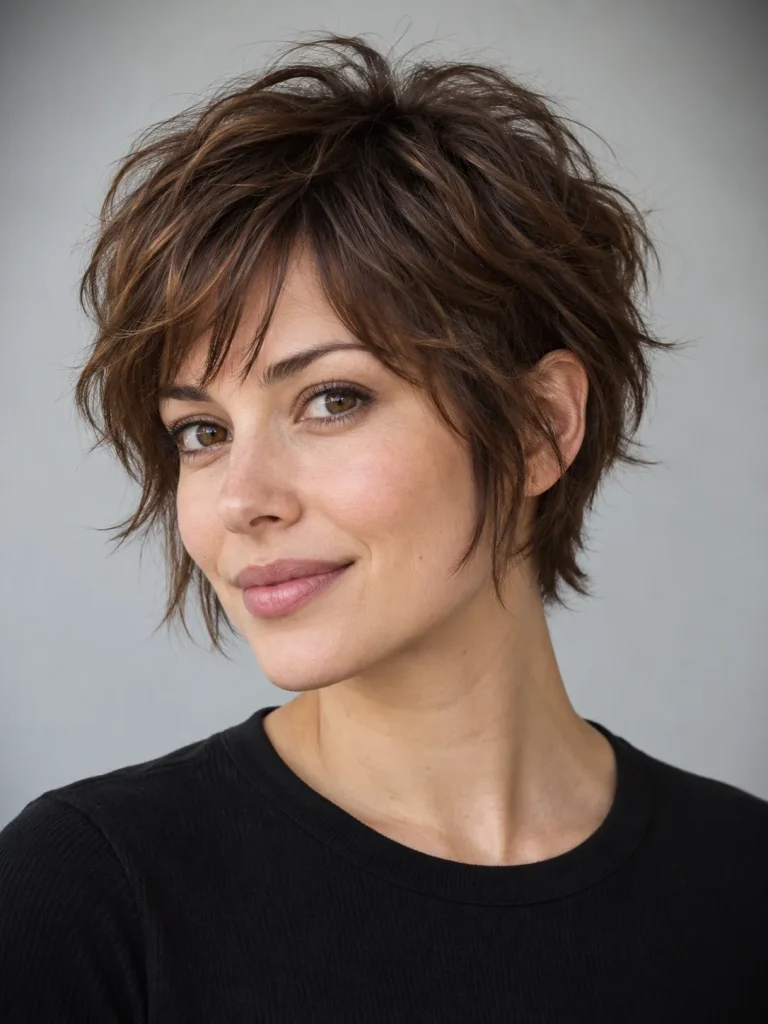
7. Tapered Pixie
The hair gradually becomes shorter toward the ears and neckline, without a disconnected undercut.
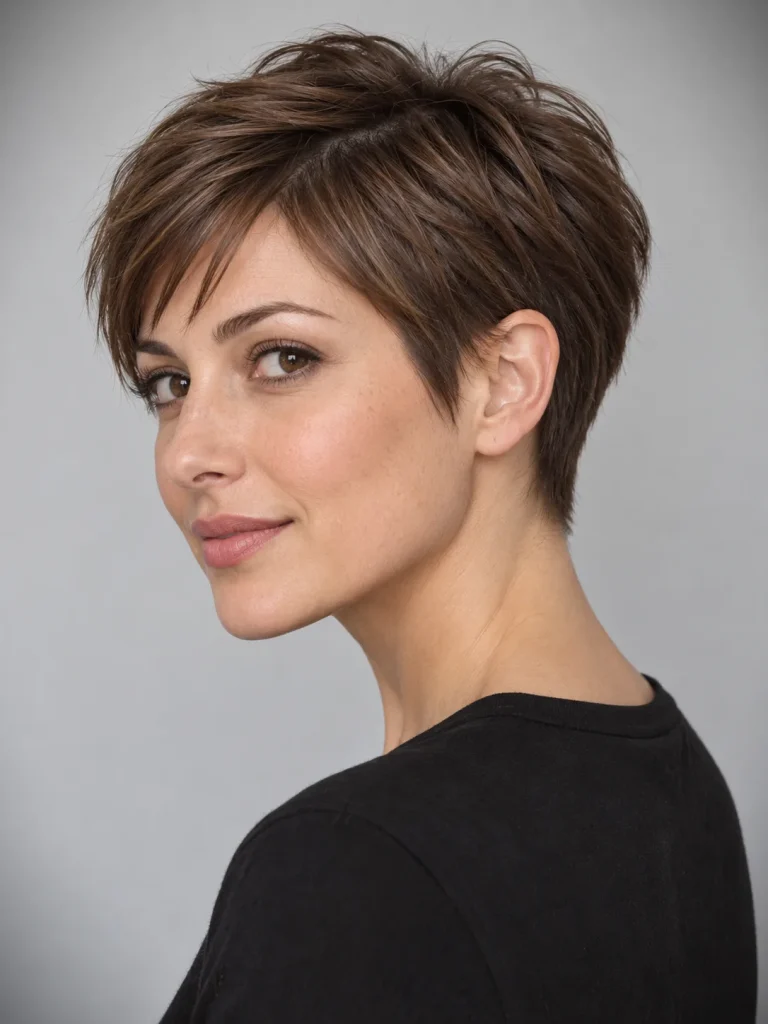
8. Undercut Pixie
A longer top sits above closely clipped sides and back, creating a clear length contrast.
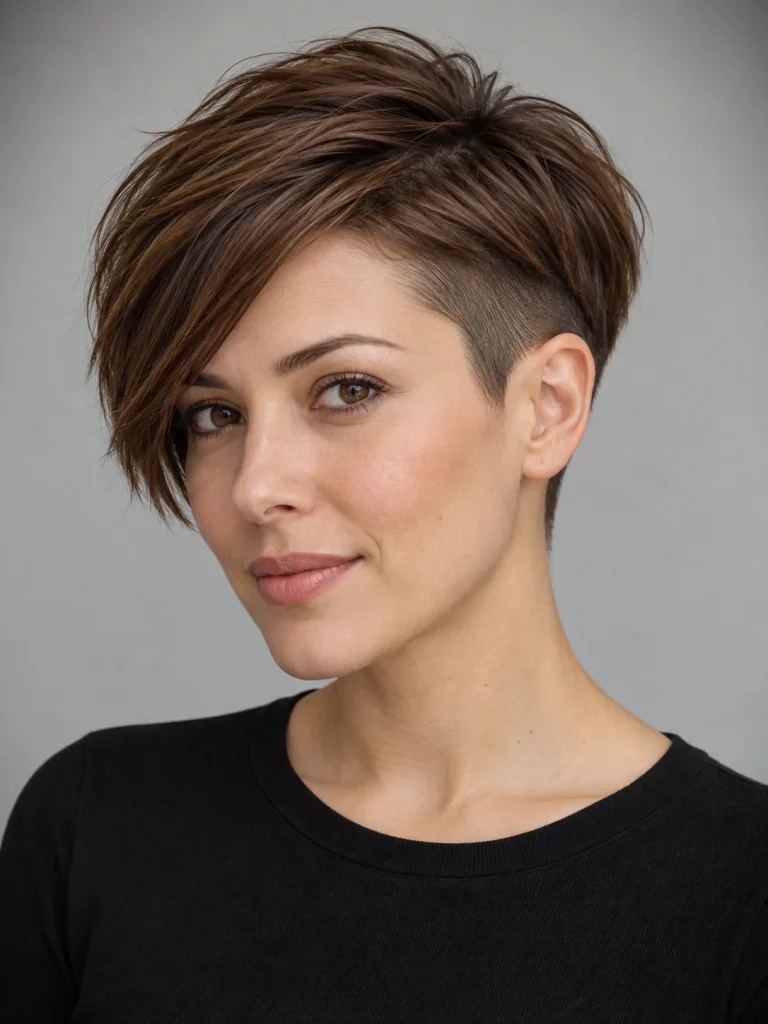
9. Side-Shaved Pixie
One shaved side creates a stronger contrast with the longer hair on the opposite side.
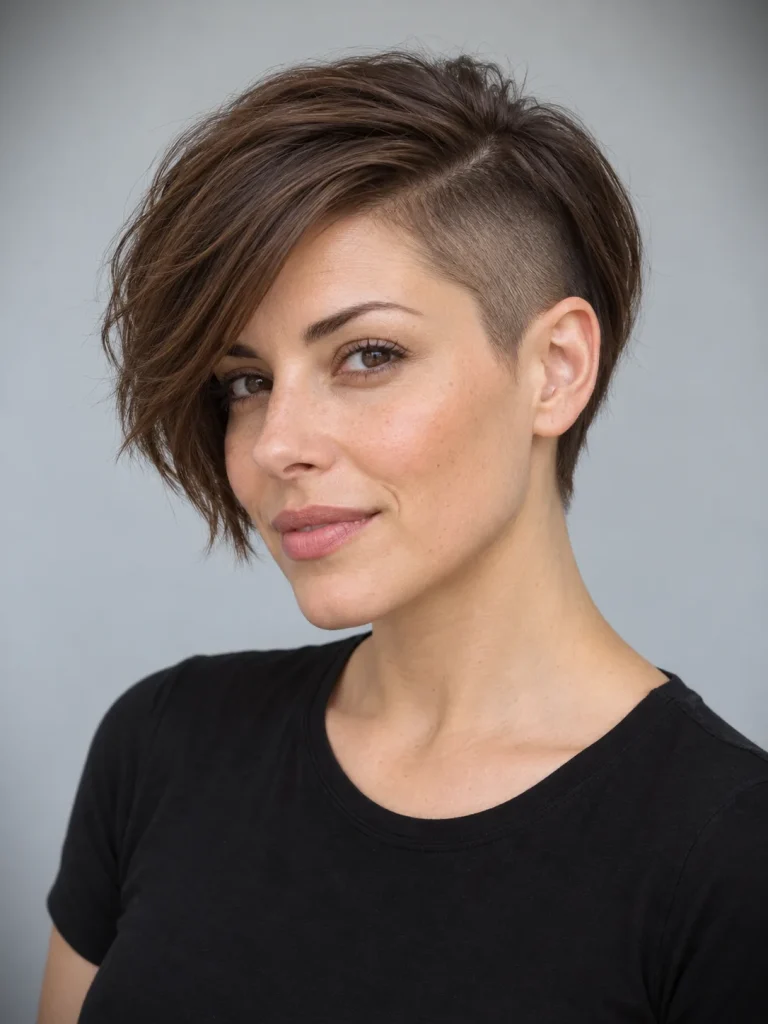
10. Asymmetrical Pixie
Unequal side lengths create a diagonal outline without requiring shaved sections.
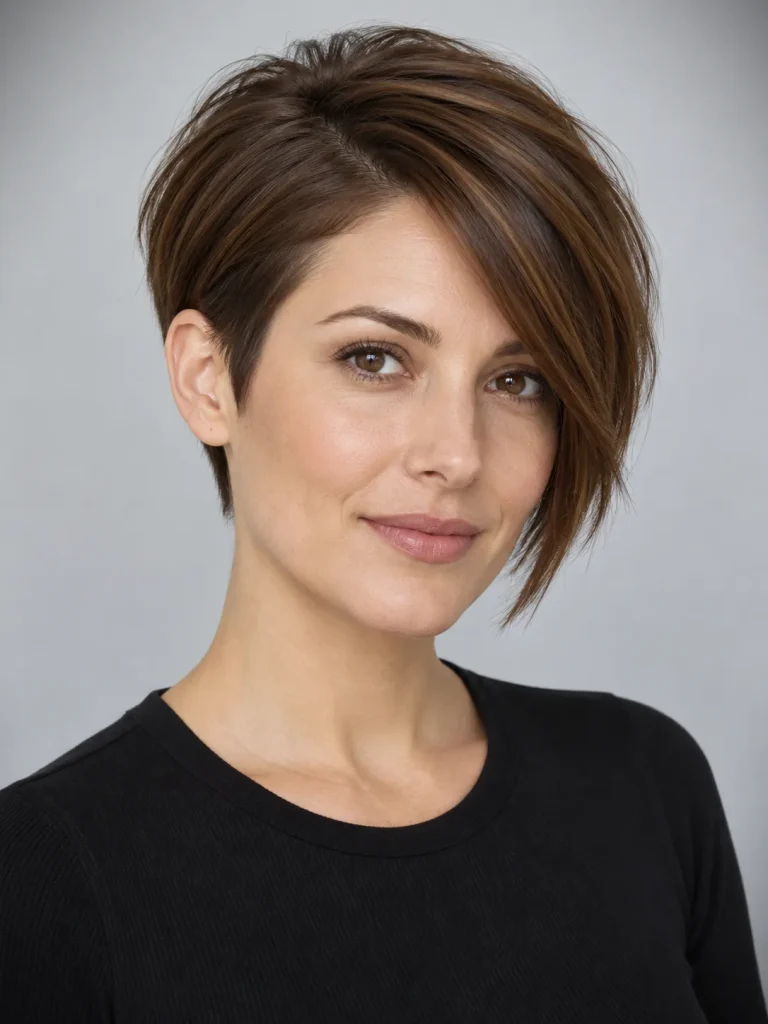
11. Long-Fringe Pixie
A substantial side-swept fringe becomes the focal point of an otherwise compact crop.
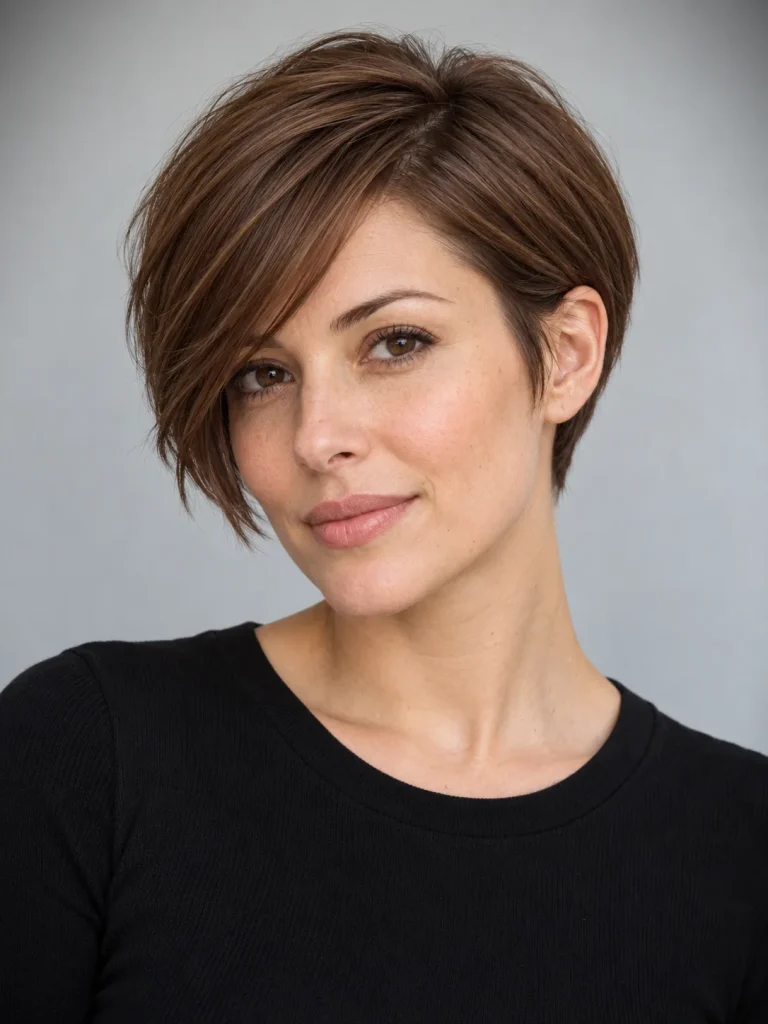
12. Micro-Fringe Pixie
A clearly defined short fringe leaves a broad area of forehead visible.
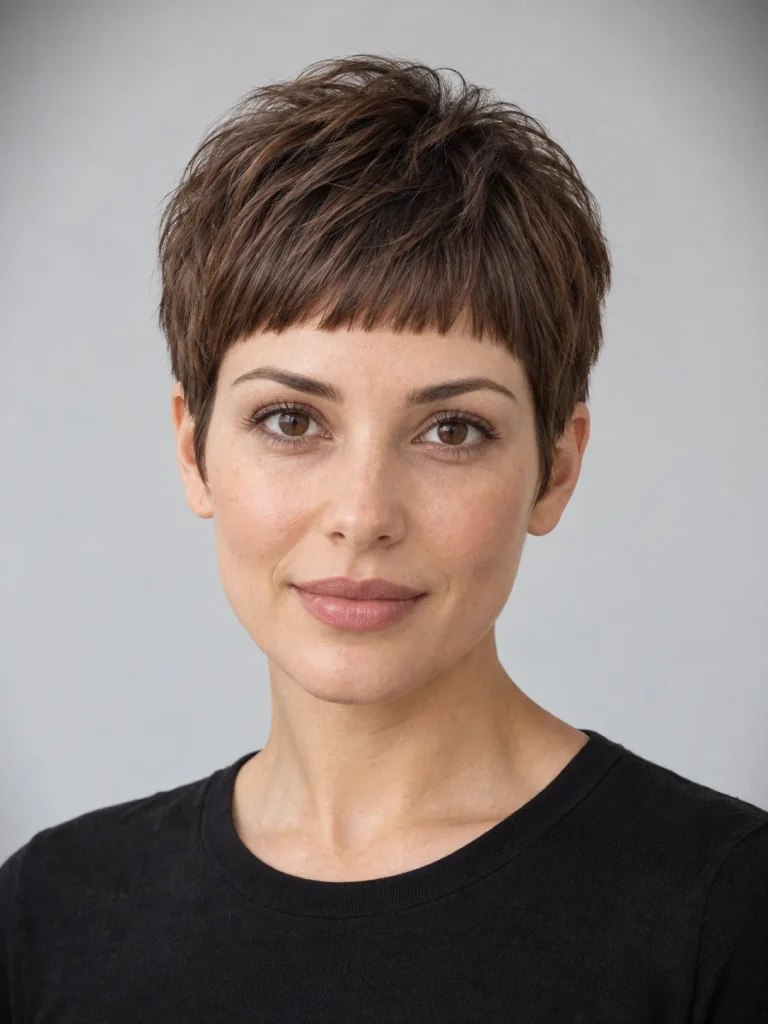
13. Bixie – Pixie – Bob Hybrid
A fuller, longer outline combines pixie layering with the ear coverage of a short bob.
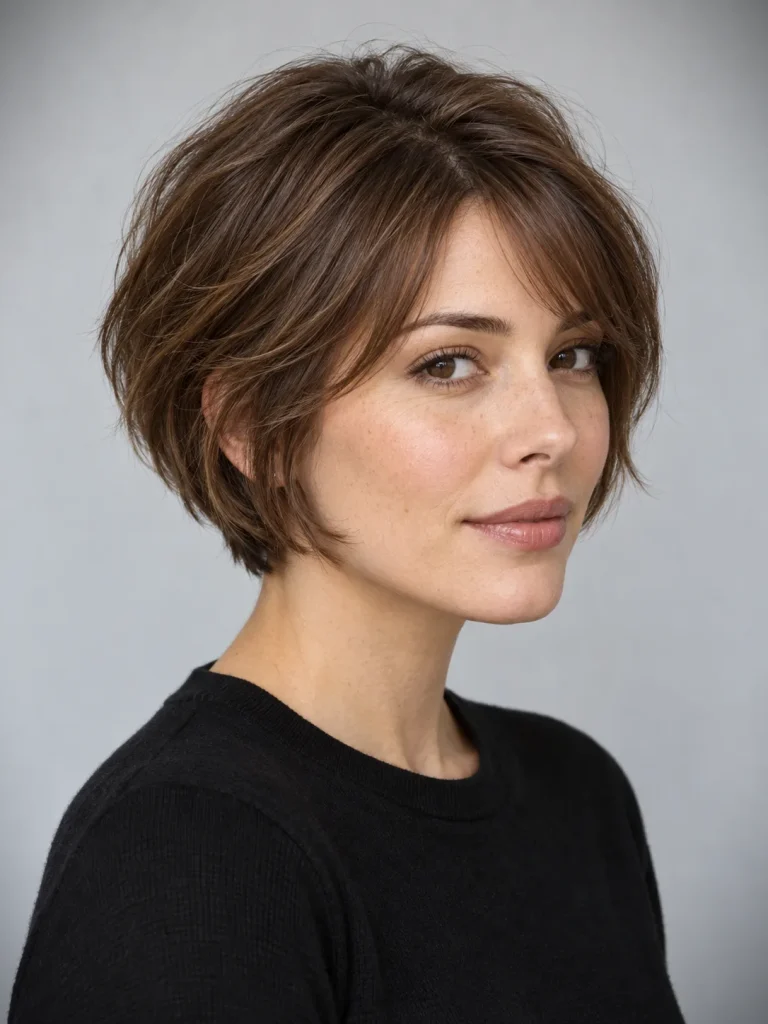
14. Mixie – Pixie – Mullet Hybrid
A cropped front and crown contrast with a longer, feathered nape.
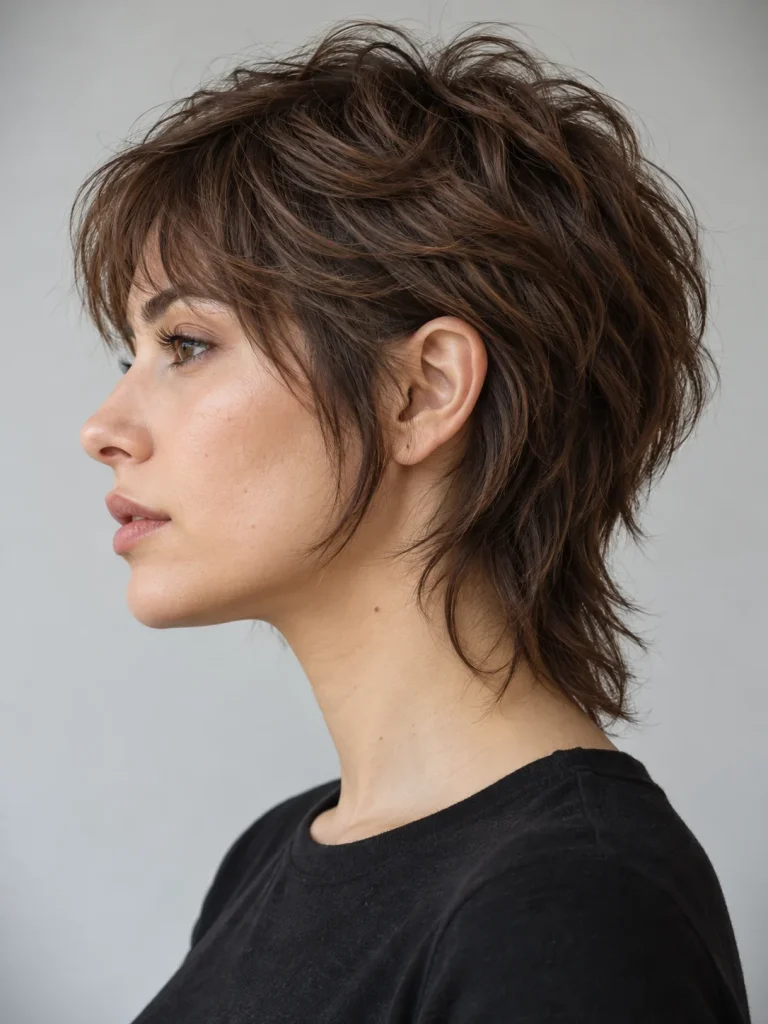
15. Wavy Pixie
Loose natural bends add movement without creating ringlets.
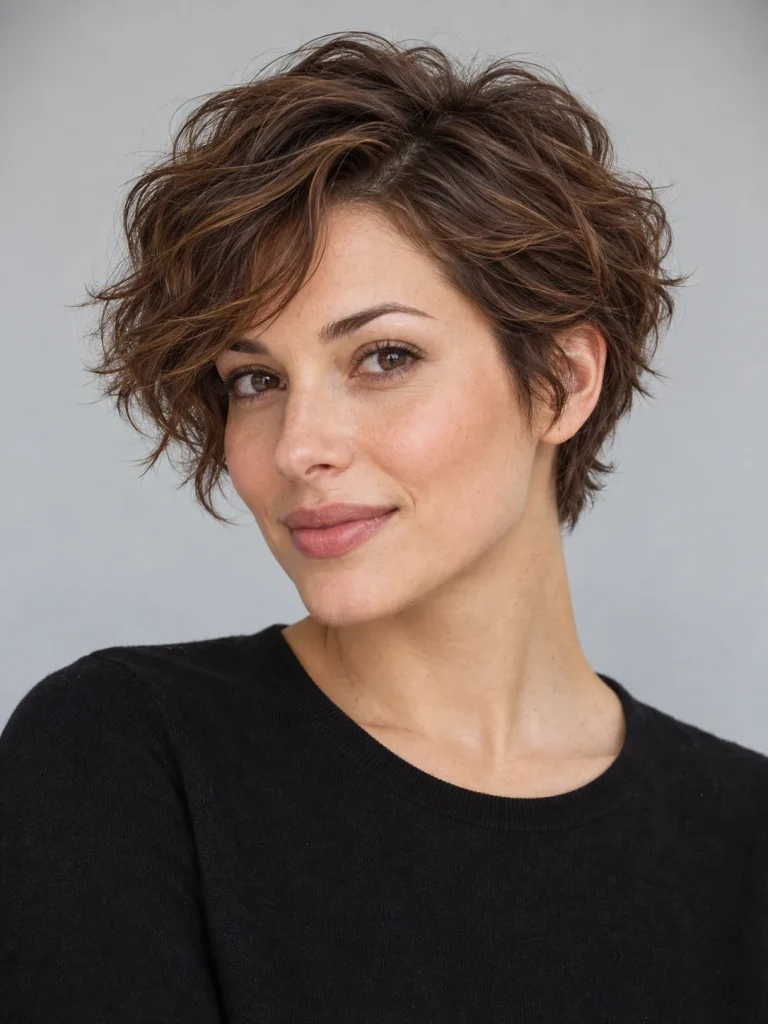
16. Curly Pixie
Defined curls form the crown and fringe above shorter, shaped sides.
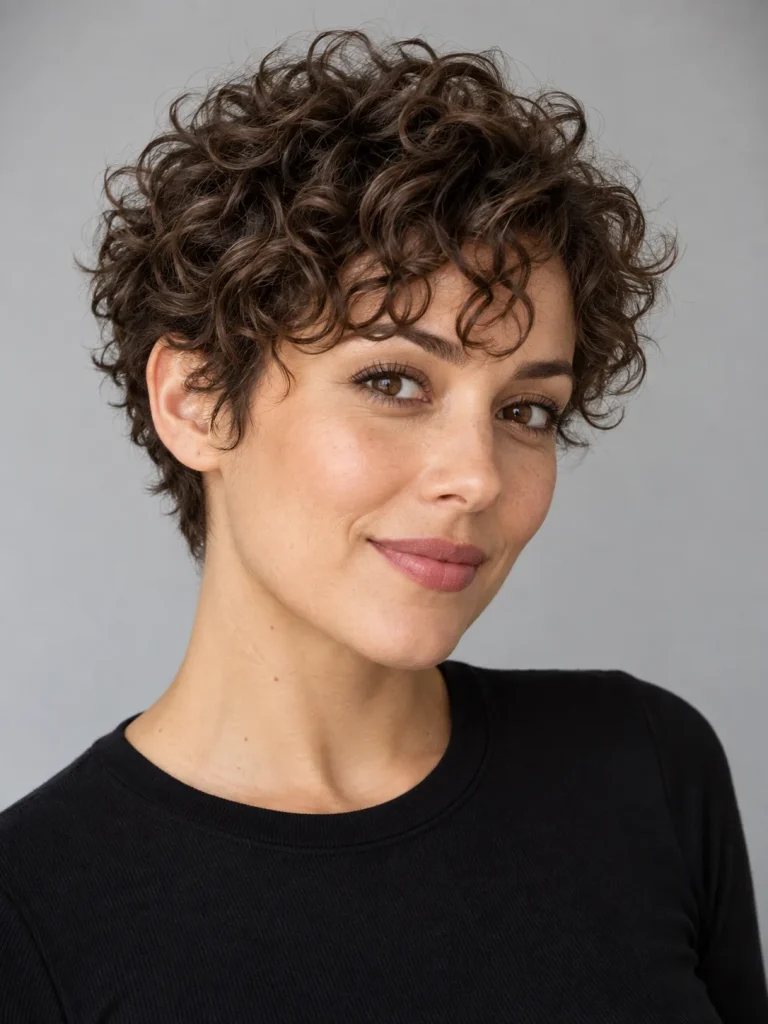
17. Coily Tapered Pixie
Tight natural coils create crown height above progressively shorter sides and nape.
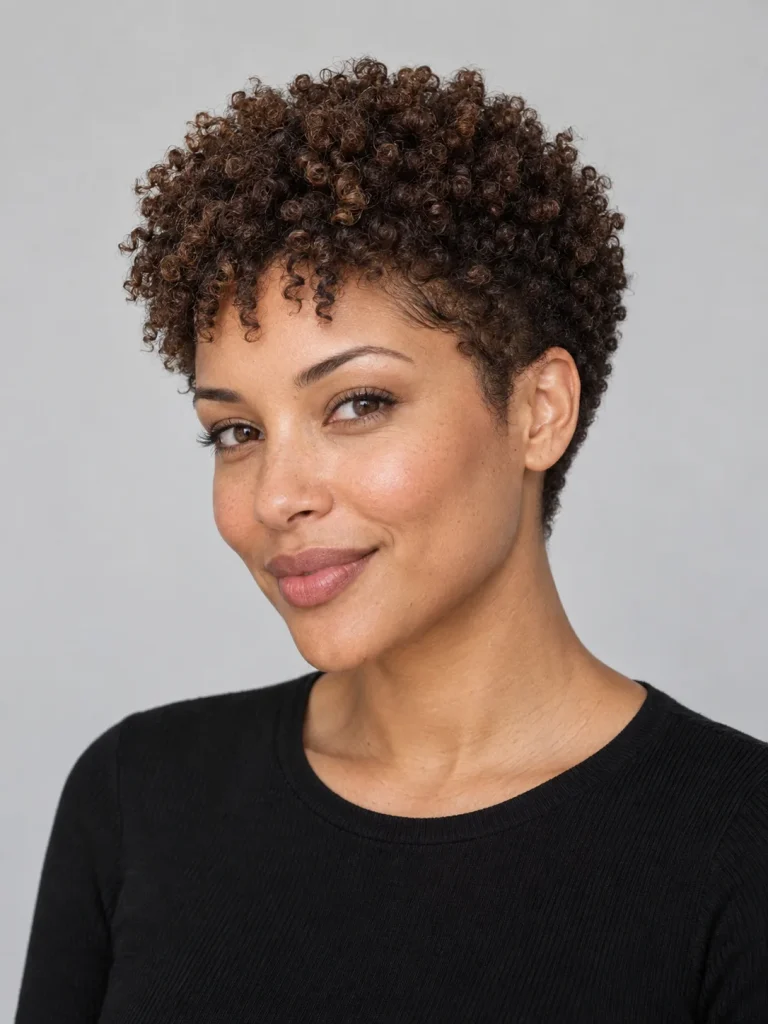
18. Sleek Side-Parted Pixie
Smooth directional styling emphasizes the part and keeps the crown close to the head.
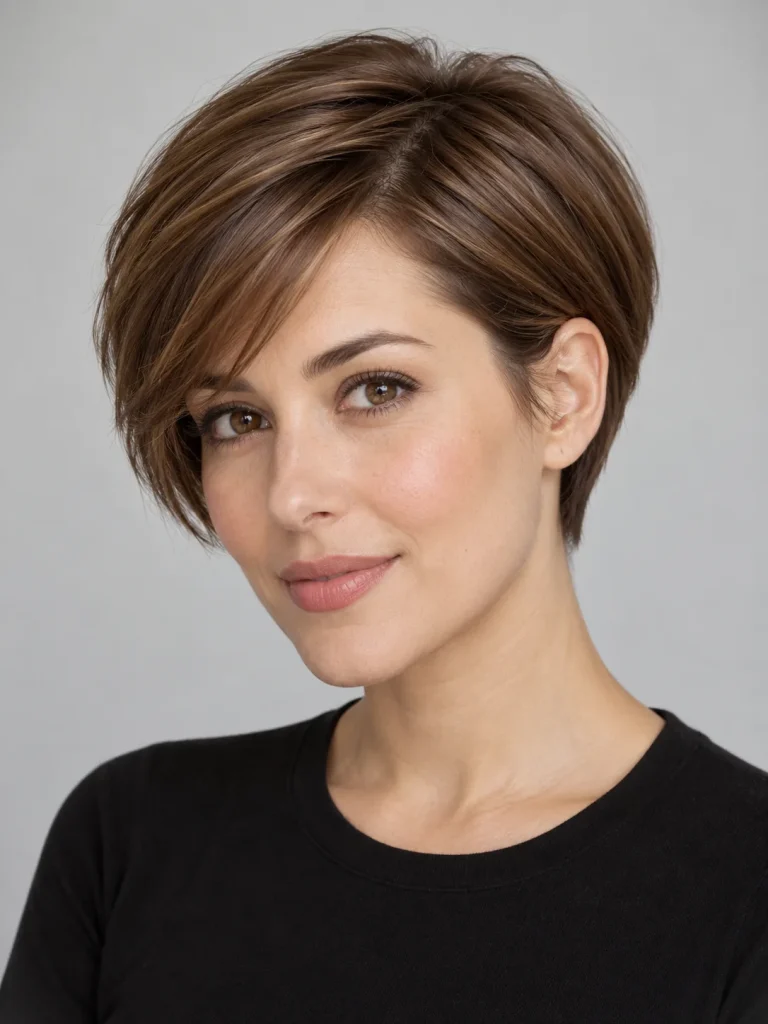
19. Swept-Back Pixie
The longer front lifts away from the forehead and flows backward over the crown.
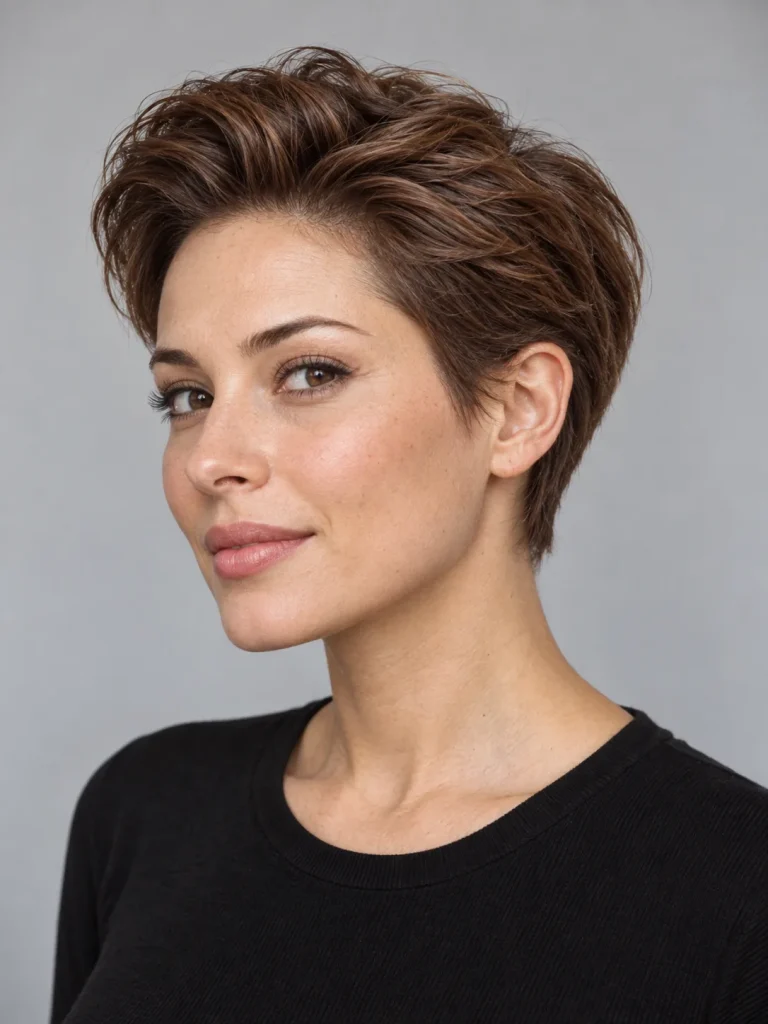
20. Spiky Pixie
Short top layers are lifted into small, separated points above a compact perimeter.
How to Choose a Pixie for Your Hair
Fine Hair
Fine hair describes the thickness of individual strands. It does not automatically mean you have fewer hairs.
Consider a classic pixie, a light side-swept fringe, or a long pixie with weight retained through the top. Be cautious about extensive thinning if your hair already separates easily.
Use styling products sparingly. A small amount of lightweight mousse or paste may give you more control than a heavy coating of wax.
Thick Hair
Decide where you want fullness and where you want a closer fit. A tapered or undercut pixie can reduce side volume, while a longer top retains movement.
Ask your stylist to remove weight selectively. Removing too much from the wrong area can make some textures harder to control.
Wavy, Curly, and Coily Hair
Choose the cut around the texture you actually wear most days.
Discuss shrinkage, curl direction, and how the sides behave after washing. If you alternate between natural and stretched styling, tell your stylist before the cut.
A reference photo shows the goal. Your dry texture helps determine the length needed to reach it.
Use Face Shape as a Styling Preference
Face shape can help you describe the effect you want, but it should not rule out a pixie.
If you want more visible height, consider a longer crown with closer sides. If you prefer less height, choose a lower top and a fringe that travels across the forehead.
For a softer outline around the jaw, try longer temple pieces or loose waves. For more forehead coverage, choose side-swept or fuller bangs.
Your hairline, texture, and comfort with exposed ears matter alongside these visual choices.
What to Tell Your Stylist
A useful salon request describes the cut from every angle.
You could say:
“I want a pixie with a softly tapered back, partial ear coverage, and a longer side-swept fringe. I usually air-dry my hair, so I need the shape to work with my natural wave.”
Before cutting, agree on the shortest areas, the dry fringe length, the neckline finish, and how much styling the reference requires.
Bring two or three photos with consistent features. One image with shaved sides and another with full ear coverage can send mixed messages unless you explain which details you want from each.
Everyday Styling and Upkeep
Reset the Shape
Dampen any flattened or bent sections after sleeping. Direct them into place with your fingers, a comb, or a brief blow-dry.
You may only need to reset the fringe and crown rather than wet your entire head.
Add Product Gradually
Start with less product than you think you need. Work it through your hands before applying it, then check the shape.
Use paste for separation, mousse for light support, or a curl product for definition. You do not need every product at once.
Plan for Trims
As a starting guide, many pixie wearers arrange trims roughly every four to six weeks. Very close sides may need attention sooner; a longer, softer shape may allow more time.
Ask your stylist for an interval based on your cut and growth. Short drying time does not necessarily mean fewer salon visits.
What to Avoid With a Pixie Haircut
Choosing a photo only because you like the model’s face. Look closely at the fringe, side length, crown, and back.
Assuming every pixie will air-dry neatly. Cowlicks and growth direction can still require styling.
Requesting heavy thinning without discussing density. Fine strands and thick hair need different decisions.
Cutting curly bangs without checking their dry position. Shrinkage can change forehead coverage.
Using large amounts of wax at once. Short hair makes excess product easy to see.
Ignoring the grow-out plan. Ask which areas should be trimmed and which should be left longer if you later want a bob.
Frequently Asked Questions
What Is the Easiest Pixie Haircut Style to Maintain?
A softly tapered pixie that follows your natural growth can be manageable day to day. The easiest choice depends on your texture and cowlicks. A very short crop leaves less hair to arrange but may need frequent trims.
Can a Pixie Cut Work on Fine Hair?
Yes. A pixie can give fine hair a defined shape, especially when enough weight remains through the top. Avoid assuming that more layers always create more fullness.
Can You Wear a Pixie With Curly Hair?
Yes. Leave enough length for the curl shape you want and discuss shrinkage before cutting. The sides can be close, softly tapered, or fuller depending on your preferred outline.
What Is the Difference Between a Pixie and a Bixie?
A pixie usually has a closer, shorter shape around the sides and back. A bixie combines that short structure with more bob-like length and fullness, often around the ears. The names overlap, so photos help clarify the request.
How Do You Grow Out a Pixie?
Decide on the next shape with your stylist. You may need to tidy the neckline while allowing the top and sides to gain length. Avoid repeatedly shortening every area if your goal is a longer cut.
Your Next Step
Choose three details before booking: how much ear coverage you want, where the fringe should fall, and how you want to wear your natural texture.
Then save reference photos showing those features from the front, side, and back. A pixie haircut style is easier to choose when you can describe the shape and the daily routine you want.

